
search
What Are You Looking For?

While consumer electronics chase billions of colors and ultra-high refresh rates, the industrial and medical sectors operate on a different set of priorities: reliability, longevity, and extreme-environment legibility. For a product designer building an industrial controller or a life-saving medical device, a high-resolution color screen is often a liability due to its high power draw and fragility. This is where monochrome technology continues to dominate.
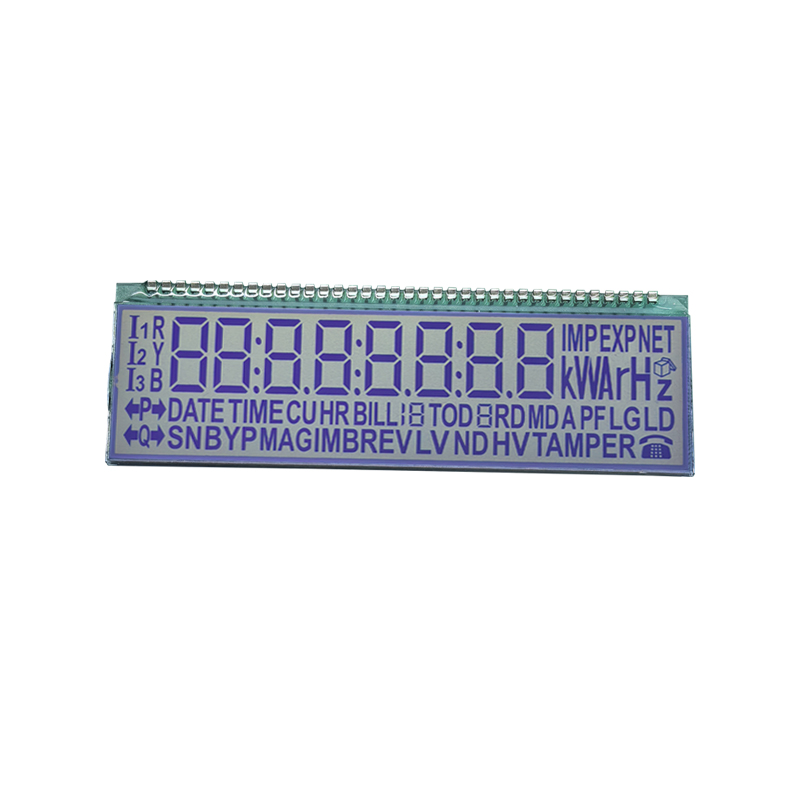
Specifying a Monochrome LCD Display is a strategic engineering choice. These displays are built for "mission-critical" uptime, offering a simplified architecture that minimizes electromagnetic interference (EMI) and survives temperature swings that would cause a standard smartphone screen to delaminate or fail.
One of the historical complaints about monochrome screens was poor contrast in low-light settings. However, modern Vertical Alignment (VA) technology has solved this. The VATN LCD Display offers a near-perfect "true black" background with a contrast ratio exceeding 1000:1. In a practical application, such as a high-end automotive dashboard or a premium coffee machine, VATN allows for "hidden-until-lit" interfaces. The icons appear vividly against a pitch-black panel, providing a sleek, modern aesthetic combined with the ruggedness of industrial-grade hardware.
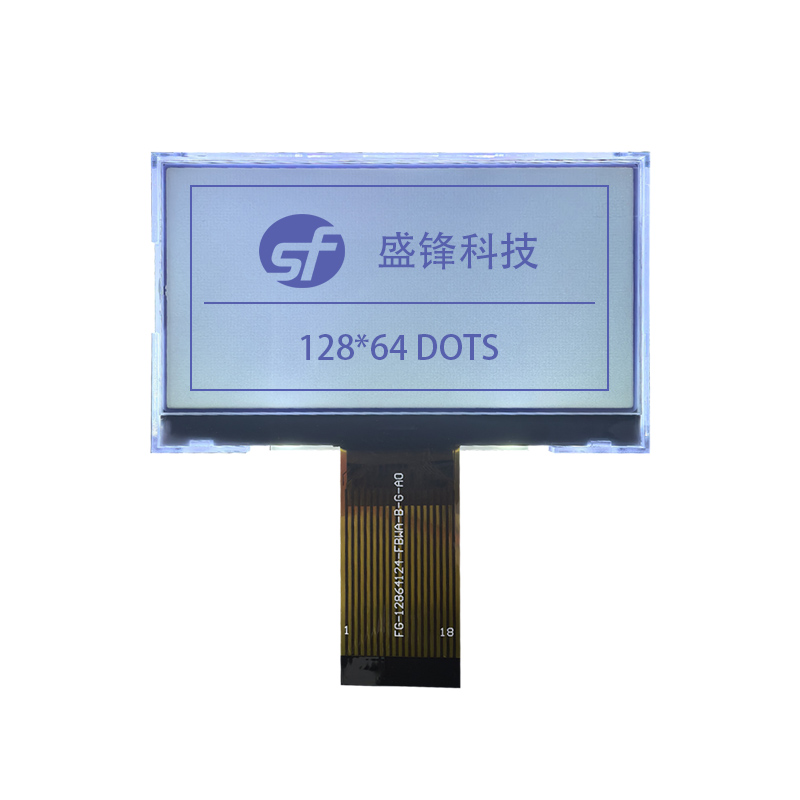
In the world of outdoor smart metering and agricultural sensors, battery life is measured in years, not hours. These devices must be readable in direct, 100,000-lux sunlight. Unlike OLEDs, which must fight the sun with high-power backlighting, a reflective monochrome LCD uses ambient light to illuminate its pixels. This is why the 128x64 Graphics LCD Module remains the industry workhorse. It provides enough resolution to display complex bar charts and multi-language warnings while drawing only microwatts of power, directly extending the field-life of remote equipment by several years.
A major pain point for industrial manufacturers is the short lifecycle of consumer-grade displays. A screen used in a smartphone might go out of production in 18 months, forcing a costly redesign of the entire product. Monochrome LCDs, by contrast, offer stable supply chains that last 10 to 15 years. This "lifecycle security" is vital for medical and aerospace industries where certification processes are lengthy and expensive. By choosing a standardized monochrome module, engineers ensure their product remains manufacturable for a decade without needing constant firmware and hardware revisions.
One of the most significant advantages of monochrome technology is the ability to create fully customized glass layouts. Unlike standard TFT or OLED panels that come in fixed aspect ratios, a Monochrome LCD Display can be designed with bespoke icons, unique digit shapes, and specific segment layouts that align perfectly with a brand's unique HMI (Human-Machine Interface) logic. This allows medical and industrial designers to build interfaces that are "idiot-proof," where only the most critical information is displayed in a layout that guides the user’s eye, reducing operational errors in high-stress environments.
The technical integration process is also significantly more streamlined. For engineers working with low-resource microcontrollers (MCUs), the interface protocol for a VATN LCD Display or a standard segment module is much simpler than driving a full-color video interface. This reduces the complexity of the PCB design and the overall BOM (Bill of Materials) cost. For complex data-heavy applications, using a proven module like the 128x64 Graphics LCD Module provides a "best-of-both-worlds" solution: the flexibility to display custom software-generated graphics with the hardware reliability and low-power benefits of monochrome liquid crystal technology.
Conclusion: The Future of Functional Displays in a High-Tech World While the world moves toward more colorful and immersive digital experiences, the industrial sector reminds us that "functional beauty" is found in clarity and reliability. Monochrome LCDs are not a legacy technology; they are an evolved, specialized solution for the most demanding environments on Earth. By choosing the right display partner and the correct module architecture, manufacturers can ensure their products deliver critical information with unwavering precision for decades to come, proving that sometimes, the simplest visual solution is the most sophisticated engineering choice.
Please read on, stay posted, subscribe, and we welcome you to tell us what you think.


Copyright © 2017 Guangdong Shengfeng Technology Co., Ltd. All Rights Reserved.Sitemap | Blog | Xml | Privacy Policy  Network Supported
 Language


 Call Us: